Columbus Park Residential Development
Project Type
Multi-Family, On the Boards, ResidentialServices
Full Architectural Services, Urban DesignLocation
Kansas City, MissouriDRAW reimagines four long-vacant blocks in Kansas City’s historic Columbus Park neighborhood as an 84-unit residential development, blending contemporary architecture with the neighborhood’s distinctive character.
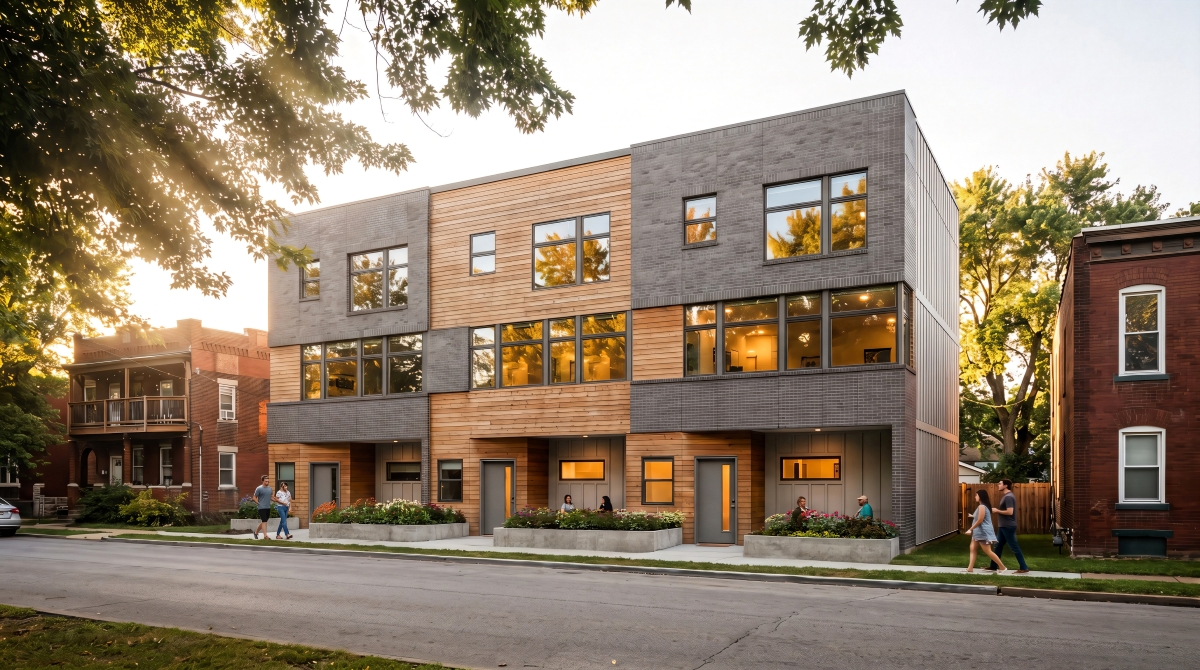
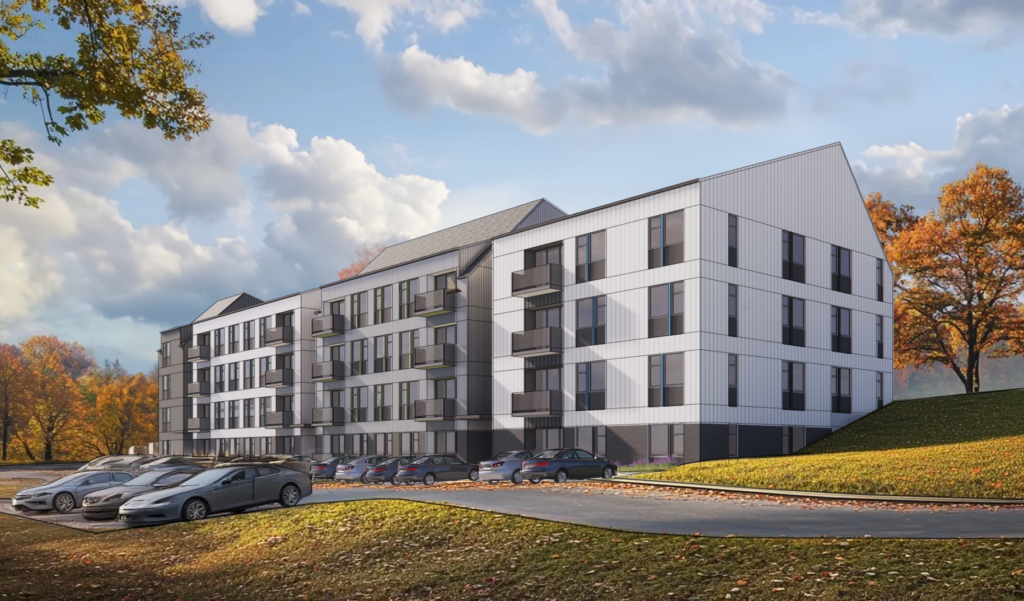
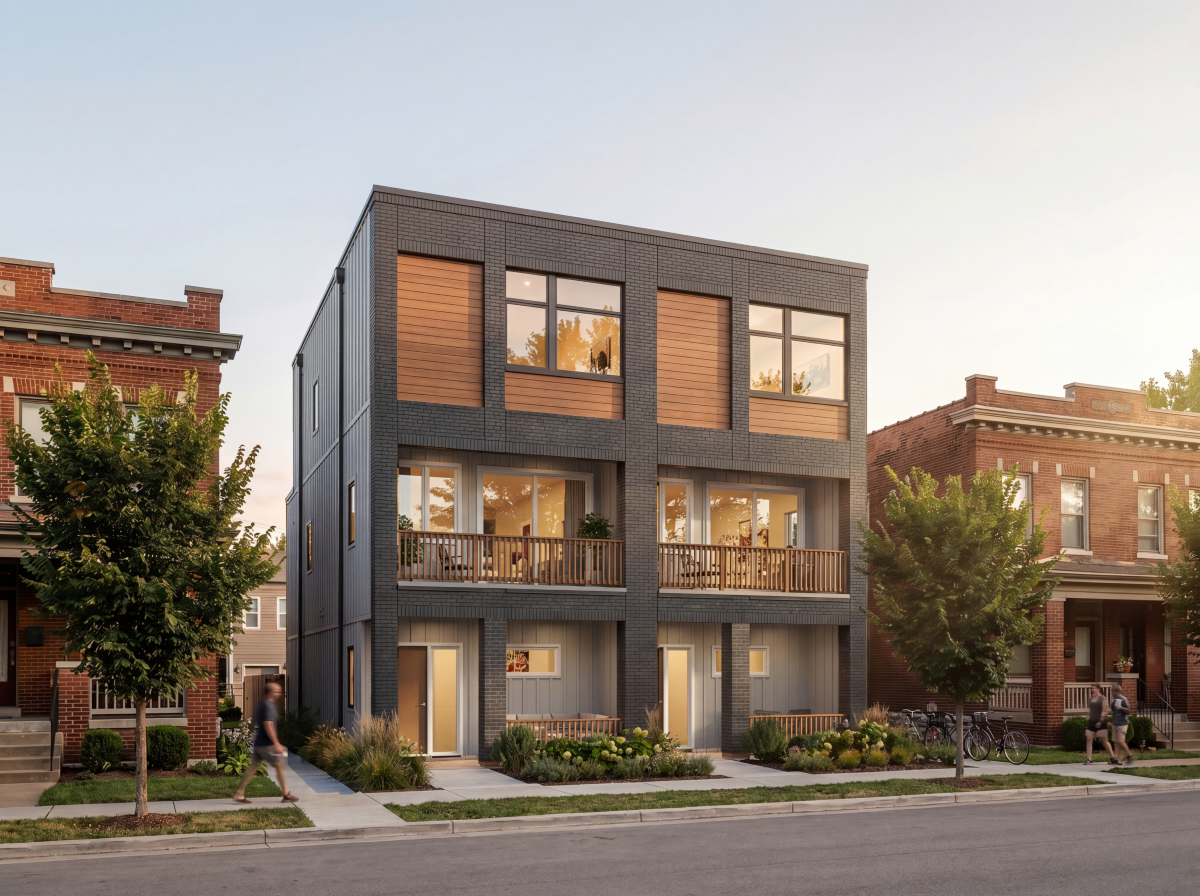
Once part of the Guinotte Manor public housing site, four blocks in Kansas City’s historic Columbus Park neighborhood have remained vacant for more than 25 years. DRAW collaborated with the client to envision an 84-unit residential development that reconnects these underutilized blocks with the surrounding urban fabric. The proposed development introduces a diverse mix of for-purchase housing options, including detached single-family homes, duplexes, and rowhouses, designed to complement the scale and character of the existing neighborhood.
Drawing inspiration from Columbus Park’s historic architecture, the design reinterprets familiar neighborhood elements through a contemporary architectural language. An analysis of surrounding residential buildings identified projecting balconies and colonnades as recurring features. These elements informed the proposed facades, creating a visual connection to the neighborhood’s architectural heritage. Exterior materials, brick colors, and textures further reinforce this relationship while establishing a cohesive identity for the new development.
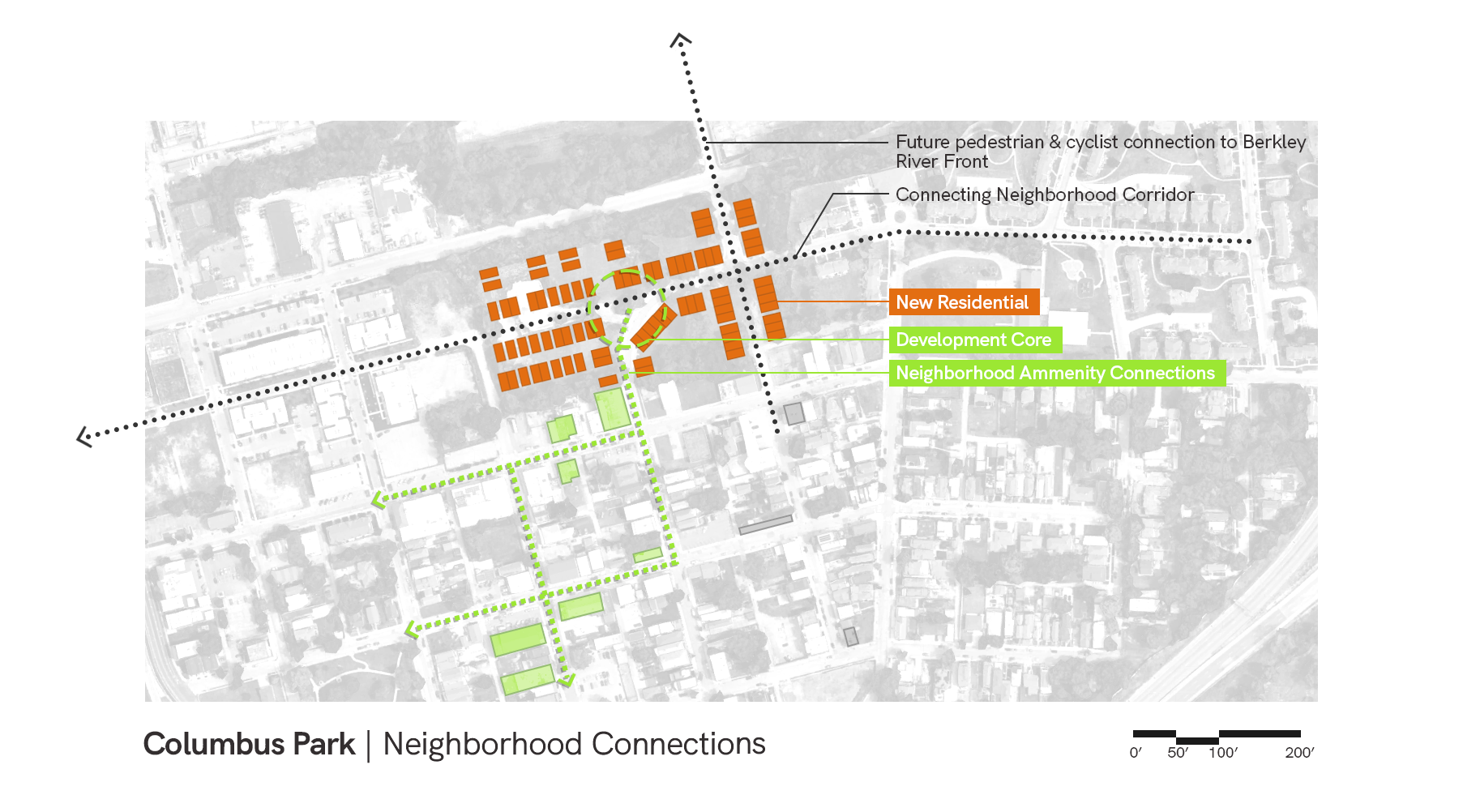
Across the four-block site, DRAW developed a coordinated architectural approach that balances design variety with construction efficiency. Shared floor plans, interchangeable window configurations, and alternating brick colors create distinct building expressions while supporting repetition and consistency in construction. This strategy introduces visual interest at the pedestrian scale without sacrificing the efficiencies of a larger residential development.
The proposed Columbus Park residential development demonstrates how context-sensitive infill housing can transform long-vacant urban land into a cohesive neighborhood extension, supporting housing diversity, walkability, and long-term community revitalization.